

7 REASONS Why Black Americans Become FRUSTRATED After MOVING to GHANA
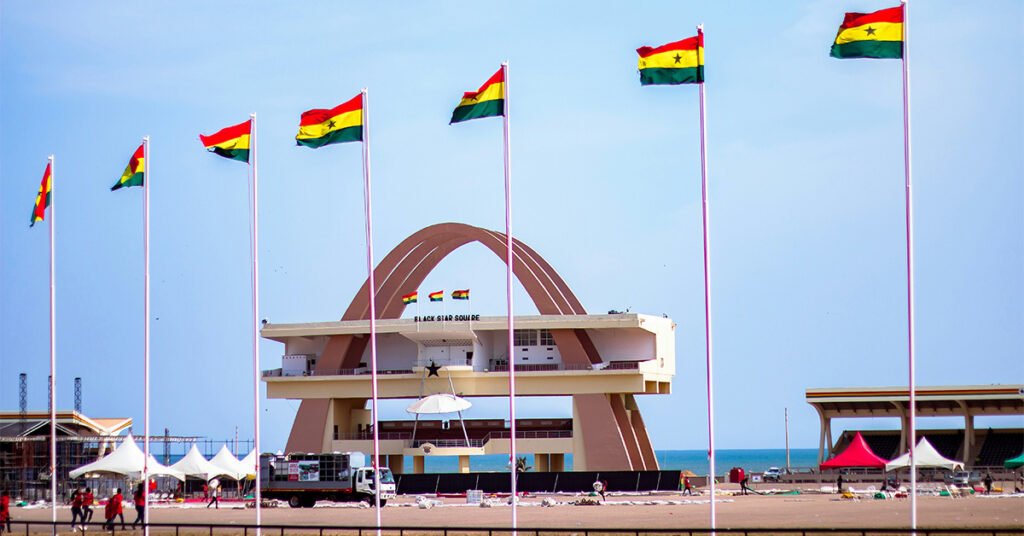
Since the Year of Return was announced and initiated by the then President, Nana Addo Dankwa Akufo-Addo, Ghana witnessed a huge influx of Black Americans who took the opportunity to reconnect with their roots and establish themselves in the country.
It was an extremely emotional period, which saw many Black Americans, as they prefer to be called, sell off property and businesses to relocate. Many came with the hope of starting a new life in Ghana. On the surface, it was a beautiful idea. The currency exchange compared to the U.S. dollar was attractive, and many arrived with unique ideas which, on paper, seemed guaranteed to work based on their research and brief understanding of the local environment.
Yet the pertinent question remains: why did so many fail and return to the U.S. with nothing after a few years, and why are so many still failing?
In this article, I will attempt to highlight factors that contribute to this failure and, in doing so, provide insight into how anyone planning to relocate to Ghana may achieve better results.
1. WHEN IN ROME, BEHAVE LIKE THE ROMANS
One issue I have found across the board is that many Black Americans find it difficult to truly assimilate with locals in Ghana. They leave the U.S., come to Ghana, and yet still cling tightly to old norms, living standards, and ideologies. This, in itself, may be the biggest issue.
Ghana is an expensive country, yet many people live here while maintaining reasonable budgets. If you come to Ghana and do not live among the people, learn from them, and remain open to adopting new norms, your reality will be one where you are physically in Ghana but financially living on an American budget.
I have seen Black Americans who come to Ghana and constantly want to eat out, refuse to experience local dishes, and avoid learning from locals how to do things for themselves. Ghana is a country where, if you refuse to learn to do things yourself, there are always people willing to do them for you, and they can easily turn you into a meal ticket. Everywhere is hot.
2. THE ELITIST MENTALITY
I state this point without prejudice, because this mentality is prevalent among many who come to Africa from other parts of the world. Many Black Americans carry an elitist mentality to varying degrees. Sometimes it is conscious, but most times it is not.
This is largely because many have been raised in environments where they were taught, directly or indirectly, that Africa and Africans are backward or unintelligent. It takes time and experience to understand that Africans and Ghanaians are not backward people they simply have their own ways of doing things, shaped by their environment and realities.
Due to this mentality, many arrive believing they have solutions to all of Ghana’s problems. As a result, listening, understanding, and adapting become difficult.
3. A FAILURE TO UNDERSTAND HOW MONEY WORKS IN GHANA
The Ghanaian economy and its financial systems should honestly be studied at a master’s level. Even Ghanaians are often dumbfounded by its intricacies. If this is the case, it should come as no surprise that it overwhelms many Americans, who come from a society with stronger price controls and standardized property valuation.
If you come to Ghana and constantly compare every expense to how things are done back home, you will eventually face serious financial strain. Ghana is a country where second-hand cars can cost more than brand-new versions. It is a system where prices are largely dependent on the discretion of the seller even the retailer. It is also a place where rent can equal the cost of a modern apartment in New York, while the apartment itself may be located in an undeveloped area.
Poor understanding of finances and the Ghanaian economy is another major reason why many people admit defeat after a few years and return to the U.S., never to come back.
To overcome this, live as Ghanaians do. Do not buy clothes from overpriced boutiques; many of them simply restock from thrift markets. Yes, Ghana has massive secondhand markets. In Accra, places like Makola Market offer almost anything at negotiable prices.
But if you are not willing to do as Ghanaians do if you insist on living in Ghana as though you are still in the U.S., then open your wallet and stop complaining.
4. LANGUAGE BARRIER IS ACTUALLY A HUGE BARRIER
As a foreigner living in Ghana myself, I initially underestimated the importance of learning the language. I later realized that when you present yourself to the average Ghanaian in Accra as someone who does not understand the local language, even though they may be friendly and helpful, many will also recognize this as an opportunity.
Your inability to speak the language is often seen as an inability to understand how things work. Prices rise instantly, services become complicated, and your wallet suffers.
But if you make the effort to learn the language especially Twi or Ga for those living in Accra, a new world opens to you. A world where it becomes possible to live comfortably on a budget that would be impossible relying only on English, especially American-accented English.
Not all Ghanaians are like this. You will always find people who are honest if you are willing to listen. But this is the general reality.
5. THE “US AGAINST THEM” MENTALITY
It does not take long to realize you have been overcharged here and there in Ghana. It is easy to feel this happens because you are Black American. There is a prejudiced belief among some Black Americans that Africans dislike them. This is untrue.
Being overcharged because you do not understand how things work is a phenomenon that happens everywhere in the world. In Ghana, this even happens to Ghanaians themselves. Accra is expensive, and sometimes that extra 100 cedis can be the difference between feeding a family and going hungry.
Understanding that many people are simply trying to survive, rather than believing Ghanaians are against you, can change your entire worldview and how you respond.
If you understand the cause of the problem, you can turn someone who once tried to overcharge you into a valuable friend who shows you the ropes.
6. GHANA IS A DEVELOPING COUNTRY; REMEMBER THIS
It is unfair to compare Ghana to the U.S. The U.S. is almost 250 years old. Even with its history, wealth, and global power, it still struggles with many fundamental issues Ghana is currently facing.
Ghana is developing. It has made impressive progress, but it also has many challenges. If you approach Ghana with the understanding that it is a developing nation, you will experience far less frustration.
7. DO NOT IDEALIZE GHANA; IT IS NOT A UTOPIA
Many Black Americans arrive with an idealized image of Ghana as a “motherland utopia” that will somehow heal everything. When they encounter the realities, blemishes, and systemic issues the country undeniably has, they become heartbroken and frustrated. Over time, many return to the U.S. with only negative stories.
It is important to understand that Ghana is simply another country. While the people may look like you, they have different cultural backgrounds, worldviews, and social realities.
If you are an American reading this, understand that Ghana is not empty land waiting for reinvention. People already live here. If you come expecting people to immediately embrace your ideas without first understanding their norms, you will experience disappointment.
What works in the U.S. will most likely not work the same way in Ghana. You must understand society before attempting to implement your ideas. Learn the language. It may not feel compulsory, but it is essential if you plan to stay long-term.
Do not attempt to follow the paths of Chinese, European, or Arab investors blindly. Many have strong financial backing or operate within systems and practices you cannot sustainably compete with.
Do not isolate yourself in the most expensive areas, shopping only in exclusive places. Eat with the people. Shop like the people. Sit in simple bars. Endure bad service. Learn how people live.
If you do this for a few years, you will naturally understand what works and what does not in Ghana.
Without this, it is only a matter of time before you make a YouTube video in tears, lamenting what you lost and how disappointed you are.
Photo by WyteShot 📸 on Unsplash
About The Author